

Ants & Mosquito Control
Ants Control
Types of Ants:
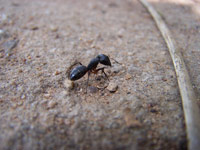
- Argentine Ant – Linepithema humille
- Black House Ant – Ochetellus glaber
- White-footed House Ant – Technomyrmex albipes
- Coastal Brown Ant – Pheidole megacephala
- Carpenter Ant – Camponotus spp
- Bull Ant – Myrmecia spp
5 Steps to Successful Ant Control
- Inspection
- Identification
- Recommendations
- Treatment
- Evaluation
RPC Ant Treatments. FAQ’s?
How will the treatment be carried out?
Our technician will first assess the property to plan the best way to control the ants. Treatment may involve dusting the roof and subfloor space; perimeter barrier spraying home, patios and garden beds, and perhaps also using ant baits or ant granules. Cavities around doors and windows will be treated as these are common ant trail areas. Internal treatment usually involves light spot spraying to skirting boards etc where ants are trailing with a safe chemical and dusting into cracks/crevices, sometimes around tap fittings and areas where activity is occurring. Every effort is made to locate and destroy the nest. RPC use the latest Ant product inside your home where often only a few litres of spray will control the ant nest. Sustainable pest management targeting specific areas with minimal chemical!
What if it rains soon after treatment?
Normally rain is not a problem. The residual dust placed in roofs and cavities is very effective on its own and is often enough to control the infestation. The liquid spray treatment is a residual and crystallises with the soil or on pavements and paths shortly after application, it then remains water resistant. We may choose to use some ant granules to external areas, which do require water to activate the pesticide. Ant granules are often used when raining at the time of treatment or rain is expected. RPC use the latest residual ant sprays containing transfer agents that can kill the entire colony and have many months residual.
What do I do if ants appear inside after Treatment?
The RPC technician will supply and install ant cafés containing liquid ant bait (3 – 6 ml) inside the building. If ants re-appear then simply shift the ant café close to the trail and they should diminish within 1-2 weeks. The bait is very effective and targets the destruction of nests. The bait is clear and odour free ideal for use in sensitive indoor areas. It can also be placed in strategic areas externally.
When should the ants start dying?
You may see ants die soon after they come into contact with the treatment. Many die as a result of RPC directly spraying the ants on the day. However, it may take up to 3 weeks to gain full control. It is impossible to rid your whole property of all ants and you should expect to see some come and go in and around the building after the treatment. They can walk 20-30ft before dying; our aim is to keep them under control inside.
When do I call the Pest Control Technician back?
Call us if you have ongoing ants problems inside, but please allow 3 weeks from when each treatment or visit is carried out, as the application takes tiime to work. It may only be the ant bait needs refilling.
How often should I have my home treated?
Good question. Ants are very unpredictable. Reinfestation will depend on location, state of repair and weather conditions. Many of our clients have their home treated each year as a knock down treatment and as a management tool for ants. Remember we cannot eradicate nature and a few ants will always be seen in around your property.
Mosquito Control
Fogging and dusting take place in larger enclosed areas such as attics and crawl spaces. These methods help to evenly blanket open areas and reach spaces that would be extremely difficult to treat with general tools. Fogging is an excellent flushing mechanism and is effective against roaches, scorpions, and other pests that hide in tight locations during the daytime. Fogging can be utilized in conjunction with standard treatments and is not just limited to crawl spaces and attics; it can also be conducted on the interior of your home. Dusting is conducted in areas that are not populated by people, such as attics and crawl spaces. Dusting is fantastic in these areas because it leaves a residual for several months. Any pest that scurries through the dust will eventually expire. Dusting is also effective against scorpions.
Fogging Operation
Provided by us are services for pest control via Fogging Operation. In this type of operation, pesticides and insecticides like pyrethrum are sprayed using fogging machine. Like aerosol based insect killers, these pesticides are very effective in killing insects and pests. Fogging is most effective for smaller organisms like mosquitoes & cockroaches, unlike birds & reptiles.
Prevention Tips
Pests and rodents aren’t simply a nuisance – they can severely affect your healthand the health of your family. This is why bug and insect prevention is critical in protecting homes, businesses, schools and any other place where human beings live, work or play from a pest infestation. Here are some general tips to preventhousehold pests and rodents from entering your home:
- Seal cracks and holes on the outside of the home including entry points for utilities and pipes.
- Keep tree branches and shrubbery well trimmed and away from the house.
- Keep basements, attics, and crawl spaces well ventilated and dry.
- Store garbage in sealed containers and dispose of it regularly.
- Repair fascia and rotted roof shingles; some insects are drawn to deteriorating wood.
- Replace weather-stripping and repair loose mortar around basement foundation and windows.
- Store fire wood at least 20 feet away from the house and five inches off the ground.
- Call a qualified pest professional for additional advice and treatment if necessary.